
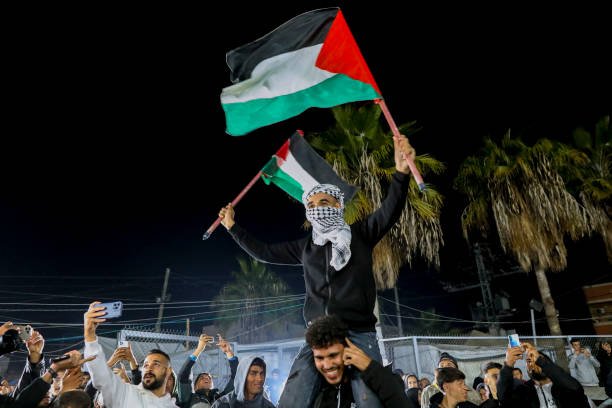
Ceasefire Takes Effect Between Israel and Hamas: A Brief Respite
A ceasefire takes effect between Israel and Hamas took effect on Sunday, signaling a temporary halt to the intense and brutal conflict in the Gaza Strip that has been ongoing for 15 months. The ceasefire, which officially began at 11:15 a.m. local time (09:15 GMT), came after a brief delay of three hours due to logistical issues. Despite the delay, the truce was a crucial step toward reducing the heavy toll the war has had on both sides, particularly the people of Gaza.
The agreement is the result of tireless mediation efforts by Qatar, Egypt, and the United States, who worked in concert to bring both parties to the negotiating table. The discussions culminated in an agreement that was celebrated by many, but the delay left some skeptical about the immediate stability of the ceasefire.
Terms of the Ceasefire Agreement
The ceasefire deal includes significant provisions for the release of hostages and prisoners. On the first day of the truce, three Israeli captives will be freed alongside 95 Palestinian prisoners. The Israeli government confirmed that the captives would be released after 4:00 p.m. local time on Sunday. These individuals, Romi Gonen, Doron Steinbrecher, and Emily Damari, were previously held by Hamas. The news of their impending release provided some sense of relief to their families and communities, marking a moment of hope amid the devastation.
Hamas, on the other hand, handed over the names of the captives earlier that day, and the announcement further confirmed that the truce would hold, at least for the immediate future. While both sides have endured tremendous losses during the conflict, this gesture can be seen as an initial sign of goodwill, albeit with many questions surrounding the future of the peace process.
The War and Its Human Cost
The 15-month-long conflict, which began in October 2023, has been described by many analysts as one of the deadliest wars of the 21st century. The human cost has been staggering. On the Palestinian side, over 46,800 people have lost their lives, and more than 110,000 have been injured. Many of these casualties were civilians caught in the crossfire of the intense fighting. The war has decimated Gaza, with neighborhoods like Rafah and Jabalia reduced to rubble. Large portions of Gaza’s infrastructure, including roads, schools, hospitals, and homes, have been destroyed, leaving millions displaced and struggling to rebuild their lives.
In addition to the death toll, more than 200 Israelis were taken captive by Hamas during the war. Their release is part of the ongoing ceasefire agreement, though it is unclear how long the truce will hold. Israeli civilians have also faced bombings and attacks from Hamas, which has only intensified the animosity between the two sides.
International Response and Mediation
The ceasefire agreement is a result of persistent diplomatic efforts by international actors, particularly Qatar, Egypt, and the United States. These nations played key roles in facilitating the discussions that eventually led to the temporary truce. However, despite their success in bringing about the ceasefire, the international community remains deeply divided over the broader implications of the war and the long-term prospects for peace in the region.
Israel’s Prime Minister Benjamin Netanyahu faces growing scrutiny for his role in the conflict. The war has attracted international condemnation, and Netanyahu himself is now the subject of significant legal and political challenges. The International Criminal Court (ICC) has issued an arrest warrant for Netanyahu on charges of war crimes, while the International Court of Justice is reviewing allegations of genocide. These developments have intensified calls for accountability and justice, further complicating the path forward for Israel.
Rebuilding Gaza and Managing the Aftermath
As the ceasefire takes effect between Israel and Hamas many Palestinians who had been forcibly displaced from their homes began to return to areas like Rafah and Jabalia, although the conditions they face are dire. Much of Gaza’s infrastructure has been completely obliterated, making reconstruction efforts a monumental task. The international community has pledged support, but the process of rebuilding will take years, if not decades, and will require substantial financial aid and resources.
Municipalities and security forces in Gaza have begun efforts to restore order and manage the early stages of rebuilding, but the challenge is immense. The city’s governance and security apparatus are in disarray, and it remains to be seen whether a lasting peace can take hold in the midst of such devastation. Reconstruction efforts will need to balance the urgent need for basic services with the long-term goal of creating stability and reconciliation between Israel and the Palestinian territories.
The Road Ahead
While the ceasefire takes effect between Israel and Hamas, temporarily eased the suffering, it remains uncertain how long the truce will last. The issues at the heart of the Israel-Hamas conflict—territorial disputes, security concerns, and the future of the Palestinian state—remain unresolved. The ceasefire agreement has only bought a brief moment of peace, and the fundamental tensions between the two sides are unlikely to disappear in a matter of days or months.
The ceasefire’s fragile nature highlights the difficulty of achieving a lasting peace in the region. Both Israel and Hamas have entrenched positions, and the road to reconciliation will likely be long and complicated. Further negotiations, both at the governmental and grassroots levels, will be required to address the underlying causes of the conflict.
In the meantime, the international community continues to monitor the situation closely. The efforts of Qatar, Egypt, and the United States have demonstrated the importance of diplomatic engagement, but the future of the ceasefire—and the broader prospects for peace in the Middle East—remain uncertain. While the release of captives and prisoners marks an important first step, the challenges of rebuilding Gaza and securing a permanent end to hostilities are still ahead