
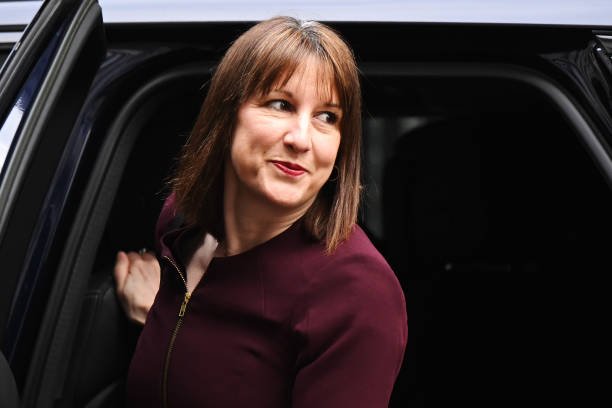
Economists Call for Tax Team Composition from Rachel Reeves in Light of Budgetary Deliberations
With spending demands rising ahead of her spring statement next year, top economists are calling on Chancellor Rachel Reeves to loosen her fiscal rules or raise taxes rather than slash spending on welfare.
Economic Prospects and Limits of Spending
The Office for Budget Responsibility, the government’s independent forecaster, is due to update its economic forecasts on 26 March, and they are likely to present a drearier picture for the UK economy. This downgrade could remove Reeves’s financial wiggle room to hit her fiscal goals.
The Chancellor says she will make up the shortfall with cuts to public spending, including welfare cuts, despite dissent inside Labour sources of Treasury. Reeves has already introduced £40 billion in tax rises in her October plan and has shown a reluctance to go further on tax.
Reeves’s Fiscal Rules and Borrowing Leeway
Reeves’s fiscal blueprint allows borrowing for investment but states that normal government spending must be covered by tax revenues. Another rule requires public debt to decline over the end of the forecast period. However, Reeves has taken a broader view of what debt is than previous chancellors have, allowing her more latitude to borrow for long-term infrastructure projects.
Speaking Friday, Reeves emphasized the importance of fiscal discipline, saying, “We need to get control of welfare spending. We have to spend more money on national defence, but we also need to reform public services and reform welfare.”
Defence Spending and Fiscal Challenges
Last month Labour leader Keir Starmer announced his party would increase defence spending to 2.5 percent of GDP by 2027, funded at the cost of deep cuts to the foreign aid budget. Labour’s development minister Anneliese Dodds quit in protest, saying it was reasonable to expect Labour to reassess its fiscal framework in light of changing world priorities.
Starmer has also promised to increase defence spending still more to 3% of GDP, but he has not yet given a time frame. Many economists wonder whether such a rise can be managed without exceeding Reeves’s self-imposed fiscal ceilings without deep spending cuts elsewhere.
Jacobs argued that Reeves might have no choice but to scope defence spending out from fiscal rules in the end, as Germany has, or resort to “security bonds” designed to attract public investment in defence. “The actual question is whether the government has the courage to take powerful action,” he said.
The Market Reaction and the Future of Fiscal Policy
Benjamin Caswell, a senior economist at the National Institute of Economic and Social Research, endorsed the idea of exempting defence spending from the fiscal rules. He contended that financial markets would probably draw a distinction between essential defence spending and past unsustainable fiscal policies, like those of Liz Truss.
“I think investors would embrace this change,” Caswell said. “Geopolitical realities have changed dramatically since the last budget, and the markets know that.”
Danny Sriskandarajah, the chief executive of the New Economics Foundation, pointed out how fluid fiscal rules tend to be, arguing that they need to be tailored to the challenges of the time. “These rules are updated frequently, and there’s a compelling argument to update them again,” he said.
He also warned that tax rises are almost certainly necessary over the medium term as the government deals with the costs of defence and an ageing society. “We need a sober discussion about the future size and scope of government spending,” he added.
Advocates for Alternative Solutions
While she has remained adamant, there are strategies that economists agree would be more effective and would not roil financial markets. David Blanchflower, a former Bank of England policymaker and a professor of economics at Dartmouth College, contended that rigid compliance with fiscal rules should not be the government’s main focus.
“With fluctuating exchange rates, changing trade policies and lingering economic uncertainty, more flexible measures are deserved.” “The focus must not be on rigid fiscal targets,” he said.
Blanchflower had previously backed Reeves’s economic policies, signing a letter in support of them ahead of last year’s general election.
Michael Jacobs, an economics professor at the University of Sheffield and a former Gordon Brown adviser, said the changing global geopolitical context, especially if the U.S. reduces its involvement in European defence, requires policy changes. “The numbers just don’t add up,” Jacobs said. “The government needs to stick with the fiscal rules when it comes to national security; one might even say revise them.”
The Pressure to Raise Taxes
Alfie Stirling, the chief economist at the Joseph Rowntree Foundation, also echoed these concerns. “Something’s got to give,” he said. “Even without the pressure of increased defence expenditure during Trump’s presidency, demographic changes are putting huge pressure on public services.”
He also said that preserving Reeves’s fiscal position could damage Labour’s political position. “If you’re quickly running down essential services across the board, by 2029 it will be increasingly hard to hold together an electoral coalition.”
Jo Michell, an economics professor at the University of the West of England, said more tax increases were unavoidable. “This process is death by a thousand cuts, and the result is the same—inevitable tax increases,” he said.
Maintaining a Balance between Market Stability and Fiscal Freedom
However, not all analysts think Reeves has the leeway to change her tune before the statement on 26 March. Paul Johnson, the director of the Institute for Fiscal Studies, warned against any further loosening of fiscal rules.
“I think quite frankly that these rules are as lenient as they could possibly be, as far as I’m concerned. We’ve seen how sensitive debt markets are,” he cautioned.
Bond yields, which determine the government’s cost of borrowing, have surged since the October budget, a sign of investor worry about the UK’s fiscal direction.
Coming ahead use of the spring statement, with a focus on finance, Reeves faces pressure to show she is managing economic responsibility, political pragmatism, and the changing needs of national security.