
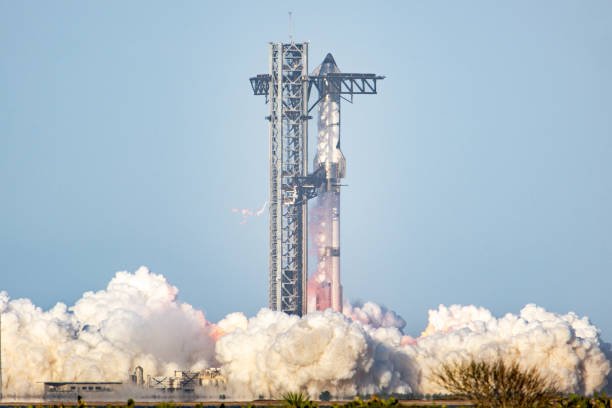
A SpaceX Starship spacecraft exploded during its eighth test flight, sending debris across the Florida skies and disrupting air traffic. The failure marks the second explosion in two months for Elon Musk’s SpaceX, raising concerns over Starship’s reliability.
Details of the Test Flight
The uncrewed Starship mission launched at 5:30 PM CT (11:30 PM GMT) from SpaceX’s Starbase facility in South Texas. The 403-foot Starship was propelled by a 232-foot-tall (71-metre-tall) Super Heavy rocket booster, a critical component of the launch system.
Booster Separation and Landing Success
After nearly three minutes of firing, the Super Heavy booster separated as planned from Starship’s upper stage. The booster successfully landed within the “chopstick” arms of “Mechazilla”, SpaceX’s launch tower near Brownsville, Texas. This marked the third successful chopstick booster catch, demonstrating advancements in booster recovery technology.
Mid-Flight Failure and Loss of Signal

However, less than ten minutes into the flight, Starship encountered issues as it continued toward space. Several engines visibly cut out during the livestream, and the spacecraft began to tumble before SpaceX lost all contact.
Dan Huot, SpaceX communications manager, commented on the livestream:
“Once you lose enough of those center engines, you’re going to lose attitude control. And so we did see the ship start to go into a spin, and at this point, we have lost contact with the ship.”
A social media user in the Bahamas captured footage of the wreckage, confirming the explosion.
Similarities to Previous Explosions
The loss of signal occurred at roughly the same stage as Flight 7 in January, when Starship exploded over the Turks and Caicos islands, scattering debris over populated areas. The latest failure raises further questions about SpaceX’s ability to refine and stabilize Starship for future missions.
While SpaceX continues to push the boundaries of space travel, the eighth Starship explosion highlights the challenges of developing next-generation spacecraft. As the company works toward a successful orbital flight, improvements in engine reliability and flight stability remain critical.
To read more stories and articles head over to our homepage https://thejournalistic.com/