
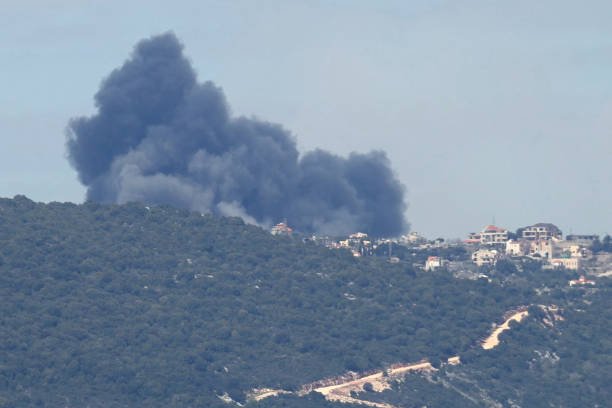
Israel launched airstrikes on Hezbollah rocket launchers and a command center in southern Lebanon after rockets were fired into Israel for the first time since the November ceasefire.
Escalation at the Border
Israeli Prime Minister Benjamin Netanyahu ordered the military to act “forcefully against dozens of terror targets.” Lebanon’s state media reported one person killed in the strikes.
The Israel Defense Forces (IDF) said three rockets were intercepted over Metula, a northern Israeli town. No group has claimed responsibility, but Lebanon’s prime minister warned against being “dragged into a new war.”
The UN peacekeeping force in Lebanon (UNIFIL) expressed concern over escalating violence and urged both sides to uphold their commitments. Lebanese reports confirmed Israeli artillery fire into several southern locations.
Fragile Ceasefire Under Pressure
The November ceasefire ended 14 months of conflict between Israel and Hezbollah. However, Israel has continued near-daily airstrikes on what it calls Hezbollah targets to prevent the group from rearming.
The Lebanese army discovered and dismantled three primitive rocket launchers in the area following the attacks.
Israel also continues to occupy five locations in southern Lebanon, which the Lebanese government calls a violation of sovereignty and the ceasefire agreement. Israel argues its forces remain to secure border communities due to an incomplete Lebanese military deployment.
Impact on Hezbollah and Lebanon’s Leadership
Saturday’s attack places further pressure on Lebanon’s government, with Israel citing the incident as proof of Hezbollah’s control over the border.
Despite repeated Israeli strikes, Hezbollah has refrained from retaliation, focusing instead on aiding communities affected by the war. The group faces domestic pressure to disarm, as Lebanese President Joseph Aoun insists that only the state should control weapons.
Lebanon’s international allies have also tied future support to efforts to curb Hezbollah’s power.
Origins of the Conflict
Hezbollah initiated its offensive the day after Hamas attacked Israel on 7 October 2023, citing solidarity with Palestinians in Gaza. The conflict escalated into an intense Israeli air campaign, assassinations of Hezbollah leaders, and a ground invasion of southern Lebanon.
The fighting has killed about 4,000 people in Lebanon, mostly civilians, and displaced over 1.2 million residents.
Israel’s stated objective remains to secure the return of 60,000 displaced Israelis from the north and push Hezbollah away from the border. However, with continued exchanges of fire, a lasting peace remains uncertain.