
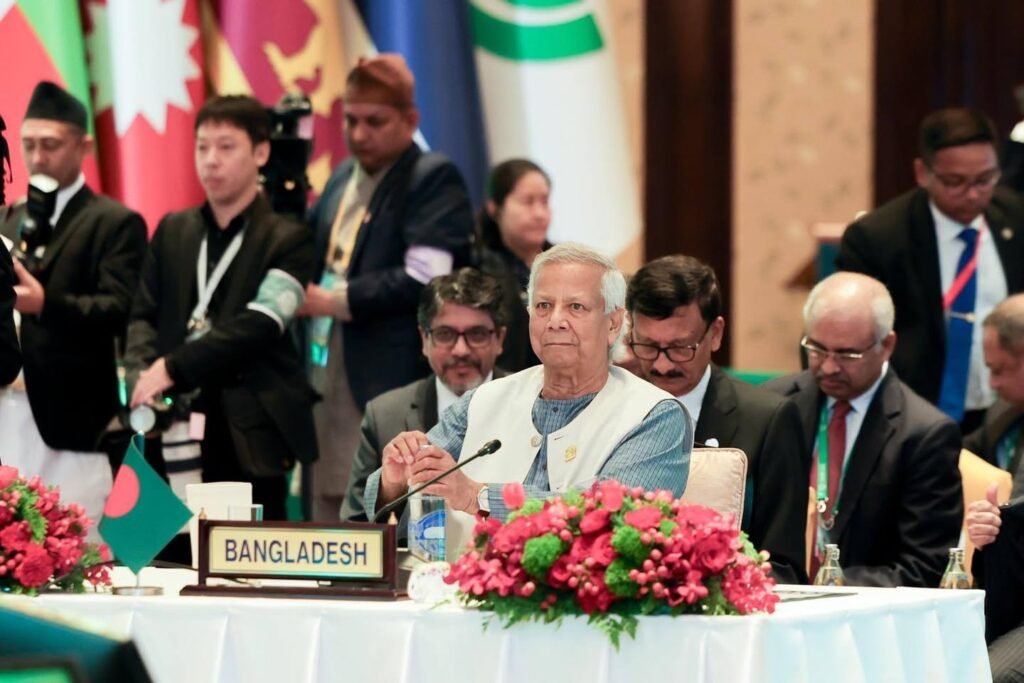
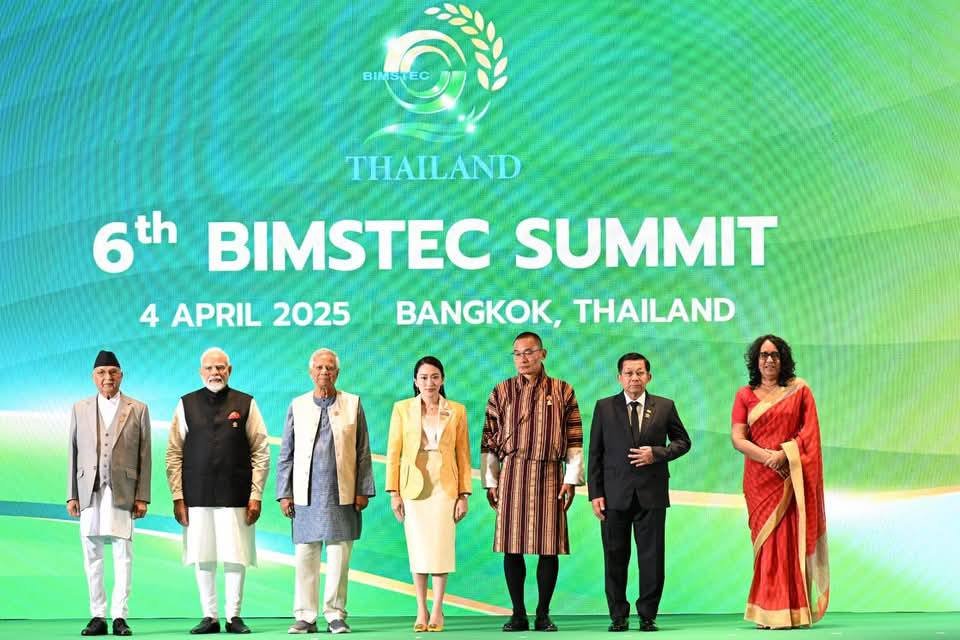
Report by Muslima Akhtar: The 6th BIMSTEC Summit concluded today with the adoption of the Bangkok Declaration and the BIMSTEC Bangkok Vision, setting a strategic roadmap for deeper economic integration and sustainable development in the Bay of Bengal region. Bangladesh officially took over the chairmanship of the seven-nation bloc from Thailand, pledging to drive forward regional cooperation over the next two years.
Bangladesh’s Leadership and Vision for BIMSTEC
Professor Muhammad Yunus, Hon’ble Chief Adviser of the Government of Bangladesh, represented the country at the summit and outlined Bangladesh’s priorities during his statement. He reaffirmed Bangladesh’s commitment to inclusive governance, economic cooperation, and regional stability, emphasizing:
- Accelerating the BIMSTEC Free Trade Agreement (FTA), calling for its swift implementation to boost intra-regional trade.
- Advancing the BIMSTEC Master Plan on Transport Connectivity to enhance road, rail, and maritime links.
- Addressing the Rohingya crisis, urging proactive measures to engage Myanmar in stabilizing Rakhine State and ensuring the safe repatriation of displaced Rohingyas.
“Bangladesh remains steadfast in upholding the constitutional rights of all its citizens, including women and minorities,” Professor Yunus stated. “We must ensure BIMSTEC is not just a forum for dialogue but a platform for action.”
Upon receiving the chairmanship from Thai Prime Minister Srettha Thavisin, Professor Yunus pledged an “inclusive and action-oriented” approach to BIMSTEC’s future initiatives.
Key Outcomes of the Summit
The Bangkok Declaration and Bangkok Vision focus on:
- Economic Integration – Finalizing the BIMSTEC FTA by 2025.
- Connectivity – Expediting infrastructure projects under the BIMSTEC Transport Connectivity Master Plan.
- Security Cooperation – Strengthening counterterrorism, cybersecurity, and disaster management efforts.
- Climate Resilience – Promoting sustainable development and renewable energy collaboration.
Bilateral Meetings on the Sidelines
Yunus-Modi Meeting: Strengthening Bangladesh-India Ties
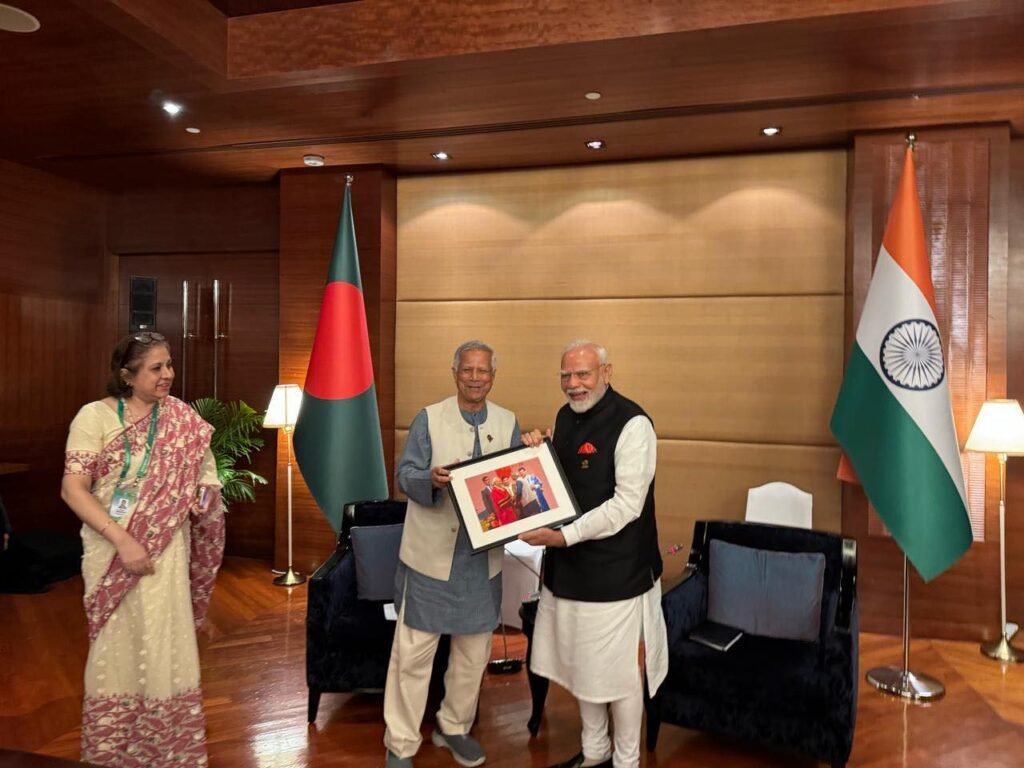
In a significant bilateral engagement, Chief Adviser Professor Yunus met Indian Prime Minister Narendra Modi on the sidelines of the summit. The two leaders discussed:
- Strengthening people-centric relations between Bangladesh and India.
- Enhancing border security to prevent illegal crossings.
- Protection of minorities, with PM Modi expressing concern over the safety of Hindu and other minority communities in Bangladesh.
During the meeting, Professor Yunus presented PM Modi with a photograph from the 102nd Indian Science Congress (2015), where Modi had awarded Yunus a gold medal for his contributions to social development.
“India remains committed to a constructive and people-centric relationship with Bangladesh,” PM Modi posted on social media after the meeting. “I reiterated India’s support for peace, stability, inclusivity, and democracy in Bangladesh.”
Breakfast Meeting with Thai Dignitaries
Earlier in the day, Professor Yunus held discussions with Thai leaders, exploring opportunities for trade, investment, and regional collaboration under Bangladesh’s upcoming BIMSTEC leadership.
Challenges Ahead for BIMSTEC
Despite the progress, the bloc faces hurdles:
- Slow implementation of past agreements.
- Myanmar’s political instability, complicating regional security and Rohingya repatriation efforts.
- Competing regional alliances (SAARC, ASEAN) diverting attention from BIMSTEC’s agenda.
The Road Ahead
With Bangladesh now at the helm, the focus shifts to:
- Finalizing the BIMSTEC FTA to unlock trade potential.
- Boosting energy and digital connectivity among member states.
- Ensuring Myanmar’s cooperation in resolving the Rohingya crisis.
As Professor Yunus takes charge, the world will be watching to see if BIMSTEC can transition from a deliberative body to an action-driven force in South and Southeast Asia.
About BIMSTEC
The Bay of Bengal Initiative for Multi-Sectoral Technical and Economic Cooperation (BIMSTEC) includes Bangladesh, Bhutan, India, Myanmar, Nepal, Sri Lanka, and Thailand, representing 1.7 billion people and a combined GDP of over $4 trillion.