

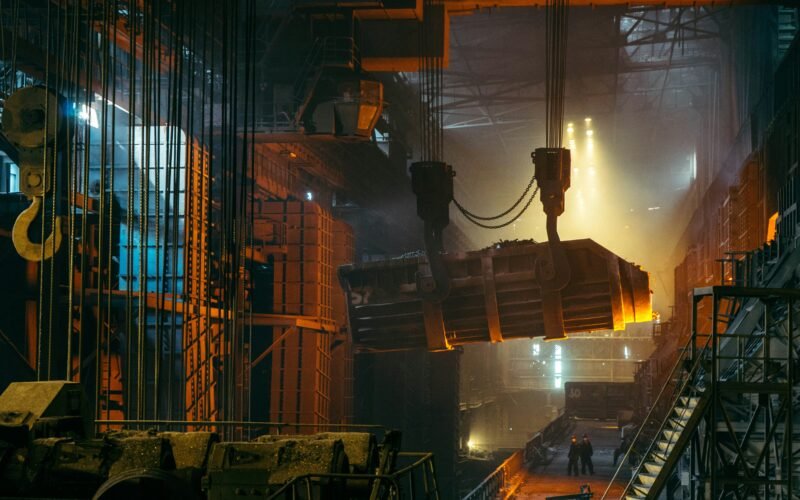
The UK government has officially brought British Steel into public ownership, completing a process that began when ministers stepped in to take operational control of the company in April 2025. The move secures the future of the Scunthorpe steelworks, protects thousands of jobs and ensures Britain retains the ability to produce virgin steel, a capability viewed as strategically important for national infrastructure, defence and manufacturing.
According to Reuters, the government decided to nationalise the loss-making business after failing to find a suitable private buyer following more than a year of efforts to secure the company’s future. British Steel had previously been owned by China’s Jingye Group, which warned that the business was no longer financially sustainable and had considered shutting down the blast furnaces at the Scunthorpe site. Reuters reported that ministers had already been spending more than £1 million a day to keep the operation running, with total government support reaching hundreds of millions of pounds.
The Associated Press reported that the decision means British Steel now belongs to the British people, with ministers focusing on stabilising the company while protecting jobs and supporting communities that depend on the steelworks. The news agency said an independent valuation will determine whether compensation will be paid to Jingye, which acquired British Steel in 2020 and invested heavily in an effort to keep the company operating despite mounting financial pressures.
According to The Guardian, the nationalisation represents one of the most significant examples of state intervention in British industry for decades. The newspaper reported that the government regarded the preservation of Scunthorpe as essential because it is home to the UK’s last remaining blast furnaces capable of producing primary steel from iron ore. Without intervention, Britain would have lost its domestic ability to manufacture virgin steel, leaving the country dependent on imports for a material regarded as critical for infrastructure projects and national security.
Reuters reported that Business Secretary Peter Kyle described the decision as a worthwhile investment despite its cost to taxpayers, arguing that maintaining domestic steelmaking capacity was vital for the country’s long-term interests. Prime Minister Keir Starmer also said the move preserved an important national capability after ministers concluded there was no viable commercial alternative capable of safeguarding production.
The Associated Press said around 2,700 people are employed directly at the Scunthorpe works, with thousands more jobs supported through the wider supply chain. The agency reported that the plant has been producing steel for more than 130 years and remains central to industries including rail, construction and defence. Ministers believe maintaining domestic production will strengthen Britain’s industrial resilience and reduce dependence on overseas suppliers.
According to The Guardian, the dispute between the government and Jingye had intensified after the Chinese company signalled it could close the blast furnaces without continuing operations. The newspaper reported that ministers viewed such a move as unacceptable because restarting blast furnaces after closure is technically difficult and extremely expensive, meaning Britain could permanently lose its primary steelmaking capability.
Reuters noted that British Steel has struggled for years because of high energy costs, international competition and global overcapacity in steel production. Those pressures made profitability increasingly difficult despite previous investment, ultimately prompting the government to conclude that public ownership offered the best chance of preserving the business while developing a longer-term strategy.
The Associated Press reported that ministers intend to build a sustainable and competitive future for British Steel while protecting skilled workers and supporting local communities. The agency said future decisions on investment and modernisation are expected to form part of a broader plan for the UK’s steel industry.
According to The Guardian, industry representatives and trade unions broadly welcomed the nationalisation, describing it as necessary to safeguard jobs and maintain Britain’s industrial base. However, the newspaper also reported that they stressed the importance of developing a clear long-term strategy that would eventually make British Steel commercially viable while reducing carbon emissions through newer technologies such as electric arc furnaces.
Reuters reported that the government has already introduced wider measures to support the steel sector, including tariff protections and trade agreements designed to strengthen domestic manufacturers against international competition. Those initiatives are expected to complement the public ownership of British Steel as ministers seek to secure the industry’s future.
The Associated Press added that the government’s immediate priority is ensuring stable operations at Scunthorpe while creating conditions for long-term investment. The company remains one of Britain’s most strategically significant industrial assets because it supplies steel used in major infrastructure and transport projects across the country.
The nationalisation marks a significant turning point in UK industrial policy, bringing British Steel back under state ownership for the first time in decades. While the move protects thousands of jobs and preserves a strategically important manufacturing capability, the longer-term challenge will be transforming the company into a financially sustainable business capable of competing in an increasingly competitive global steel market. As reported by Reuters, the Associated Press and The Guardian, ministers believe public ownership provides the stability needed to begin that transition while ensuring the UK retains an industry viewed as essential to its economic resilience and national security.