
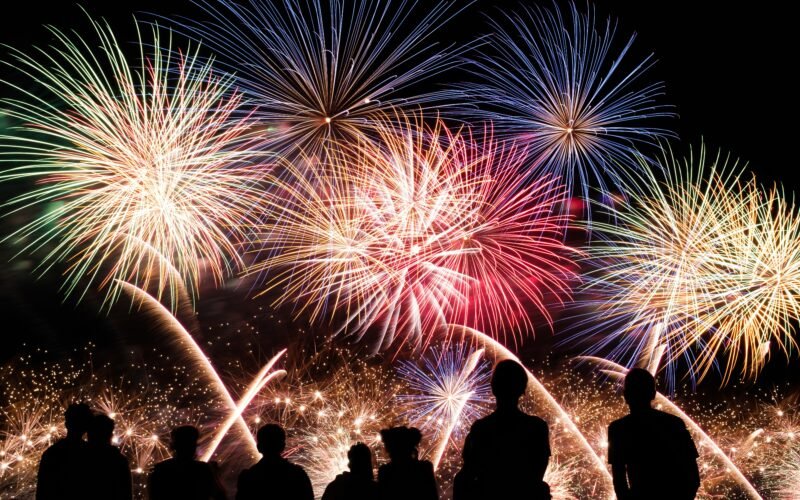
Bonfire Night 2026: A Sky Full of Fireworks and a Haze of Concern
Recently, the United Kingdom looked up at the autumn sky and celebrated one of its oldest traditions – Bonfire Night, or Guy Fawkes Night. As the occasion fell on 5 November, 2026, the celebrations spanned across the surrounding weekends, when big public events took place on Saturday, 31 October, Saturday, 7 November, and Sunday, 8 November. It is the day that marks the discovery of the plot of gunpowder against the parliament, traditionally celebrated through raging bonfires, torchlight parades, and amazing fireworks displays. However, this year’s celebrations raised yet another issue related to the tradition – air pollution.
This year, as Bonfire Night fell on a Thursday, the majority of the scheduled displays were moved to the nearest weekends to maximise attendance. It is quite common now since many local councils stopped to fund free public displays because of the increasing cost of staging them. Some towns, such as Lewes and Plymouth, traditionally kept their famous displays on 5 November, considering the observance of the exact date as one of the elements of their tradition, whereas in bigger places like Battersea Park, London, and Mayflower Park, Southampton, huge events were scheduled for the weekend of 7-8 November. Some areas witnessed radical changes in Bonfire Night’s landscape; for example, the free council bonfires in Leeds and Nottingham are cancelled now, although Manchester managed to introduce free displays in three parks.
Despite the entertainment brought by the fireworks, the impact of the Bonfire Night on the environment is considerable. Bonfire Night is considered to be one of the most polluted nights in the UK. Smoke from the bonfires and various chemicals that fireworks release contribute significantly to the amount of fine particles, particularly PM2.5 and PM10. Calm and dry evenings keep them near the surface and cause the levels of air pollution to jump drastically. The government monitoring revealed that the levels of particle pollution on Bonfire Night may go up to “high” and “very high” bands of the Daily Air Quality Index in some years.
In addition, the Bonfire Night was accompanied by the poor weather conditions. In the days before and after the celebrations, different parts of the country had to deal with fog and mist, especially in the south and east. The Met Office issued a fog warning in Sussex where dense mist affected people’s travels, and London became the top 10 most polluted city on 8 November, 2026. The combination of cold, stagnant and brumous weather with the high humidity did not allow the pollutants to disperse and resulted in the air quality crisis. The mixture of smoke from the bonfires and fireworks and the background air pollution from the road traffic and domestic wood burning created a dangerous situation for numerous people.
The health specialists constantly warned that the fine particles may irritate airways and make breathing difficult for people with asthma and other respiratory and heart problems. It is also said that visiting one, large and organised display creates less smoke than thousands of people holding bonfires and fireworks individually, and vulnerable groups are advised to check air pollution forecasts and keep windows closed in the evening. Although there are health risks connected with this tradition, the tradition itself is still an integral part of the British culture, and the whole families gather to eat jacket potatoes and mulled cider and enjoy the spectacular performance.
As the smoke from the Bonfire Night 2026 gradually disappears, it becomes clear that this holiday raises the question about the balance between cultural heritage and ecological responsibility.