

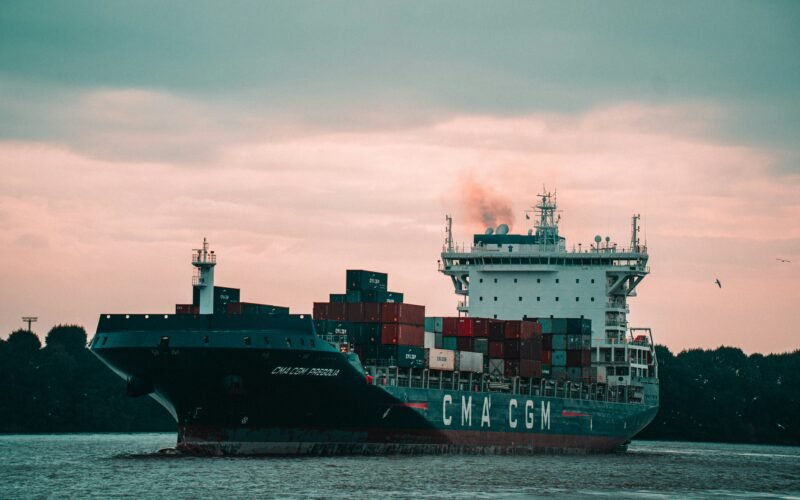
A commercial cargo ship came under attack in the Red Sea off the coast of Yemen on Sunday, marking another security incident in one of the world’s most strategically important shipping lanes and raising fresh concerns about the safety of international maritime trade. The assault occurred near the Houthi-controlled port of Hodeidah, where tensions have remained high despite periods of reduced attacks in recent months.
According to the Associated Press, the incident took place around 30 nautical miles southwest of Hodeidah after armed assailants approached the vessel in a small skiff and opened fire. The ship’s onboard armed security team responded with return fire, prompting the attackers to retreat to a larger support vessel that reportedly had its automatic identification system switched off. No injuries were reported among the crew, and the vessel was able to continue its voyage while authorities launched an investigation into the attack.
The British military’s United Kingdom Maritime Trade Operations (UKMTO), which monitors commercial shipping in the region, issued an alert confirming that an incident involving a merchant vessel had occurred in the southern Red Sea. According to The Times of India, UKMTO initially described the assault as being carried out by unknown armed assailants and said investigations were underway to establish exactly who was responsible and whether the attack formed part of a broader pattern of maritime threats in the region.
While no organisation had officially claimed responsibility at the time of reporting, the attack took place in waters where Yemen’s Iran-backed Houthi movement has previously carried out numerous strikes against commercial shipping. According to the Associated Press, Houthi forces have repeatedly targeted vessels transiting the Red Sea and the Bab al-Mandab Strait since late 2023, saying their campaign is linked to the conflict in Gaza. Those attacks have disrupted one of the world’s busiest trade corridors and forced many shipping companies to reroute vessels around southern Africa, adding both time and cost to international trade.
The latest incident also highlights the complex security picture facing ships operating in the region. According to the Associated Press, maritime authorities have warned that threats are no longer limited to missile and drone attacks. Piracy originating from the Horn of Africa has also shown signs of resurgence, with Somali-based armed groups blamed for several recent attacks in nearby waters. Investigators are therefore examining whether the latest assault was connected to militant activity linked to Yemen or represented a separate act of piracy.
Security analysts say the attackers’ tactics suggest careful planning. The use of a fast-moving skiff supported by a larger vessel operating with its tracking system disabled indicates an organised operation designed to approach commercial shipping without attracting attention. The decision by the ship’s private security team to return fire is believed to have prevented the situation from escalating further and allowed the crew to avoid injury.
According to The Times of India, authorities have not released the name of the vessel involved or disclosed its cargo, ownership or final destination while investigations continue. Officials are also working to determine whether additional naval assets in the area observed any suspicious activity before or after the attack.
The incident comes only days after separate concerns surrounding commercial shipping in the wider Middle East. According to Reuters, South Korea recently confirmed that one of its cargo vessels, the Namu, remains under repair following a missile strike earlier this year in the Strait of Hormuz. Although South Korean investigators were unable to conclusively identify who carried out that attack, the case demonstrated how commercial vessels continue to face security risks across several key maritime routes linking Europe, Asia and the Middle East.
Maritime experts have warned that each new incident increases pressure on shipping companies, insurers and naval forces operating in the region. Even when attacks do not result in casualties or significant damage, they contribute to rising insurance premiums, increased security costs and continued disruption to global supply chains. Many shipping operators continue to deploy armed guards on board vessels travelling through high-risk areas while closely monitoring military advisories before entering the Red Sea.
The Red Sea remains one of the world’s most important commercial waterways, connecting the Suez Canal with the Gulf of Aden and the Indian Ocean. Millions of tonnes of cargo pass through the corridor every year, making any disruption significant for international trade. Shipping companies have increasingly had to balance commercial efficiency with crew safety as regional instability continues to affect navigation.
Although Sunday’s attack ended without reported injuries or major damage, it serves as another reminder that maritime security challenges remain unresolved despite international naval patrols and enhanced surveillance efforts. Authorities continue to investigate who carried out the assault and whether it forms part of a wider campaign targeting merchant shipping.
For now, commercial operators are expected to remain on heightened alert while transiting the Red Sea, with security agencies urging vessels to follow recommended reporting procedures and maintain close communication with naval authorities as they navigate one of the world’s most sensitive maritime corridors. The investigation into the latest attack is ongoing, and further details are expected as officials gather additional evidence from the vessel and its crew.