
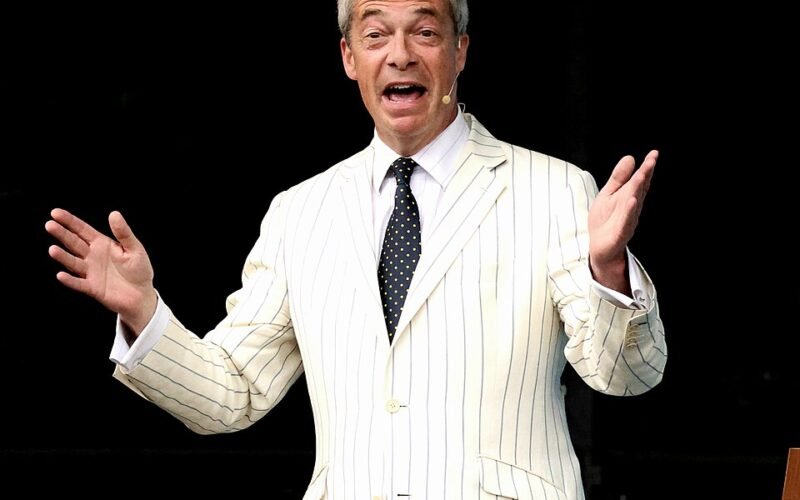
Few politicians have reshaped modern British politics as profoundly as Nigel Farage. Over three decades, he transformed Britain’s relationship with the European Union from a fringe political issue into one of the defining constitutional changes in the country’s modern history. As the founder of the Brexit Party, a leading figure in UKIP, and now the leader of Reform UK, Farage has become one of the most influential—and divisive—political figures in Britain.
His supporters argue that he restored democratic accountability by campaigning for Britain to leave the European Union, returning law-making powers, border control and trade policy to Westminster. His critics contend that his style of politics has intensified social divisions, particularly regarding immigration, multiculturalism and Britain’s ethnic and religious minorities.
The debate surrounding Nigel Farage is therefore about much more than one politician. It reflects wider questions about British identity, democracy, immigration, economic policy and Britain’s place in the world.
The Rise of Brexit Politics
Nigel Farage joined the Conservative Party as a teenager but left after opposing the Maastricht Treaty, believing that increasing European integration reduced Britain’s national sovereignty. In 1993, he became a founding member of the UK Independence Party (UKIP), which campaigned primarily for the UK’s withdrawal from the European Union.
For many years, UKIP remained a small political movement. Under Farage’s leadership, however, it grew into a major political force. The party’s success in the 2014 European Parliament elections demonstrated growing public dissatisfaction with Britain’s relationship with the EU and increased pressure on the Conservative government to hold a referendum.
The 2016 referendum resulted in 51.9 percent of voters choosing to leave the European Union. Although Farage was one of the most recognisable campaigners, Brexit was the product of a broader political movement involving figures from the Conservative Party, Labour Party, UKIP, the Democratic Unionist Party and several campaign organisations.
Immigration and Political Division
Perhaps the most controversial aspect of Farage’s politics has been his emphasis on immigration.
Supporters argue that concerns about border security, pressures on public services and the scale of immigration are legitimate public policy issues that democratic governments should address. They maintain that Farage gave a political voice to voters who believed these concerns had been ignored by mainstream parties.
Critics argue that some of his campaign messaging, particularly during the Brexit referendum and subsequent elections, contributed to heightened tensions around immigration and national identity. Some academics, community organisations and political opponents have argued that such rhetoric risks increasing hostility towards immigrants and minority communities, including Muslims and other ethnic minority groups.
At the same time, it is important to distinguish between criticism of immigration policy and hostility towards particular communities. Farage has consistently stated that his opposition is directed at immigration policy rather than individuals based on race or religion. His critics dispute whether the practical impact of his rhetoric has reflected that distinction.
Britain’s Muslim and Ethnic Minority Communities
Britain’s Muslim, Black, Asian and other ethnic minority communities form an integral part of modern British society.
They contribute significantly across the economy, including:
- the National Health Service;
- education;
- scientific research;
- engineering;
- financial services;
- retail;
- hospitality;
- transport;
- entrepreneurship; and
- small and medium-sized businesses.
Many British Muslims are entrepreneurs who create employment, invest in local communities and contribute to exports and international trade. Likewise, people from South Asian, African, Caribbean and other minority backgrounds play important roles in public services, business and innovation.
Economic studies generally suggest that immigration has both costs and benefits depending on factors such as skill levels, labour market conditions and public investment. Economists disagree on the overall net impact, but there is broad agreement that immigrants make substantial contributions to the British economy while also increasing demand for housing, healthcare and infrastructure.
Investment and Britain’s International Reputation
Some business leaders have expressed concern that highly polarised political debate surrounding immigration could affect perceptions of Britain as an open and welcoming destination for international talent and investment.
However, there is no conclusive evidence that Nigel Farage has pursued policies intended to discourage Muslim investors specifically or to advance another country’s political agenda. Such claims would require strong evidence beyond political disagreement.
Foreign investment decisions are influenced by a wide range of factors, including economic growth, taxation, regulation, political stability, access to skilled workers and global market conditions.
The Economic Record After Brexit
Brexit has produced both opportunities and challenges.
Supporters argue that Brexit has enabled Britain to:
- negotiate independent trade agreements;
- regain control over fisheries and agricultural policy;
- establish an independent immigration system;
- make domestic regulatory decisions without EU approval; and
- exercise greater parliamentary sovereignty.
Critics point to several economic challenges, including:
- increased trade friction with the European Union;
- additional customs procedures;
- labour shortages in some industries;
- reduced exports in certain sectors;
- lower long-term growth projections compared with continued EU membership; and
- continuing uncertainty for some businesses.
Most economists conclude that Brexit has increased barriers to trade with Britain’s largest trading partner while recognising that its full long-term economic effects continue to evolve.
Britain’s Financial Obligations
Although the UK left the European Union in January 2020, it agreed to meet financial commitments made while it was a member. These obligations, often referred to as the “financial settlement” or “Brexit divorce bill”, have continued to be paid over several years under the Withdrawal Agreement. They are not payments for continued membership but the settlement of previously agreed commitments.
Reform UK and Contemporary Politics
Following Brexit, Farage established the Brexit Party, later renamed Reform UK. The party expanded its focus from leaving the European Union to broader issues including immigration, taxation, government spending, public sector reform and energy policy.
Reform UK has gained electoral support by presenting itself as an alternative to both Labour and the Conservatives, particularly among voters dissatisfied with mainstream politics.
British Values
Whether Nigel Farage’s politics strengthens or weakens British values remains one of the most contested questions in contemporary politics.
Supporters argue that he promotes democratic accountability, freedom of speech, national sovereignty and stronger border controls.
Critics argue that aspects of his political style contribute to greater social polarisation and may undermine inclusion and social cohesion.
Britain’s recognised fundamental values—including democracy, the rule of law, individual liberty, mutual respect and tolerance for people of different faiths and beliefs—provide a framework against which all political movements, including Reform UK, continue to be debated.
The Importance of Diversity
Britain has long benefited economically, culturally and scientifically from successive generations of migration. Skilled workers, entrepreneurs, investors and professionals from diverse backgrounds contribute to sectors facing labour shortages and support economic growth.
If large numbers of skilled workers or investors from any community—including Muslim or other ethnic minority communities—were to leave the UK, many sectors could experience recruitment difficulties, reduced investment and slower economic growth. The scale of any impact would depend on how many people left, which industries they worked in and whether they were replaced by domestic workers or new migrants.
Looking Forward
Nigel Farage has undoubtedly altered British politics more than almost any other politician of his generation. Whether history judges his legacy positively or negatively will depend on how Britain performs economically, socially and internationally in the decades following Brexit.
For voters, the decision to support or oppose Nigel Farage should rest on careful consideration of evidence, party policies and democratic debate rather than political loyalty alone. Supporters may conclude that his emphasis on sovereignty, immigration control and political reform addresses genuine public concerns. Opponents may conclude that his approach risks increasing division and reducing Britain’s openness and international influence.
Ultimately, the future of Britain will depend not only on the policies of one political leader but on the ability of governments, institutions and communities to balance economic prosperity, democratic accountability, social cohesion and respect for the country’s diverse population.