

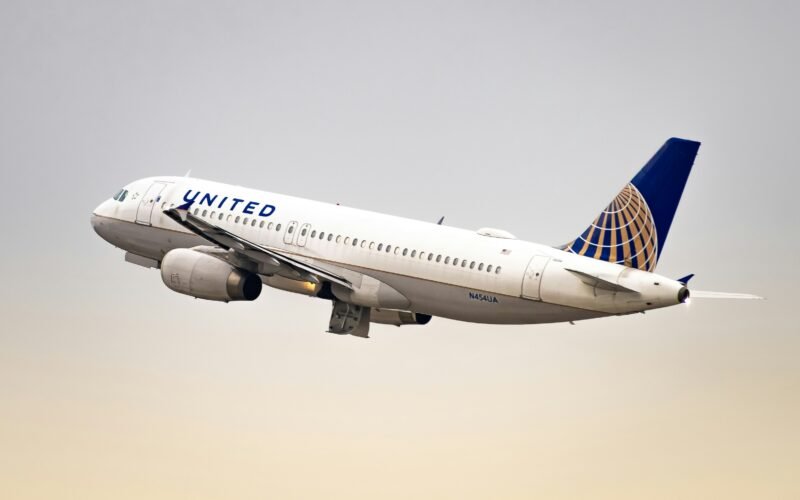
A United Airlines transatlantic flight travelling from Italy to the United States was forced to divert to Ireland after the flight crew reported abnormal engine vibrations and an unusual odour during the journey, prompting an emergency landing that ended safely without injuries to any of the 227 people on board.
The incident occurred on July 11 aboard United Airlines Flight 509, a scheduled service from Rome Fiumicino Airport to Newark Liberty International Airport. The aircraft, a Boeing 767-400ER, had departed Italy on what was expected to be a routine flight across the Atlantic before the crew detected technical issues several hours into the journey.
According to People, the aircraft took off from Rome at approximately 1:36 p.m. local time and had been airborne for around three hours when the pilots reported unusual vibrations affecting the aircraft’s right engine. Around the same time, the crew also detected an unidentified odour inside the cabin, leading them to determine that diverting the flight was the safest course of action.
Rather than continuing across the Atlantic toward the United States, the pilots turned the aircraft north-west and requested permission to land at Shannon Airport on Ireland’s west coast. Flight tracking data showed the aircraft making a significant course change while over the Atlantic before descending toward Ireland.
According to The Clare Herald, the flight crew declared an emergency with air traffic controllers and requested that airport fire and rescue services be placed on standby before arrival. Emergency responders positioned themselves alongside the runway in accordance with standard procedures for aircraft reporting engine-related technical problems and preparing to make an overweight landing.
The Boeing 767 landed safely at Shannon after spending more than four hours in the air. Following touchdown, the aircraft exited the runway under its own power and taxied while emergency personnel conducted a visual inspection of the aircraft. According to The Clare Herald, firefighters paid particular attention to the landing gear because the aircraft had landed above its normal certified landing weight after carrying additional fuel that would ordinarily have been burned during the planned transatlantic crossing.
An overweight landing is a recognised emergency procedure used when an aircraft must land before consuming enough fuel to reach its intended landing weight. Although aircraft are designed to withstand such landings when necessary, additional inspections are required afterwards to ensure that the landing gear, brakes and surrounding structures have not sustained damage from the extra loads experienced during touchdown.
United Airlines confirmed that the aircraft had diverted “to address an issue with one engine” and said all passengers and crew disembarked safely after arriving in Shannon. According to People, the airline arranged hotel accommodation, compensation and rebooking assistance for affected passengers while engineers began evaluating the aircraft before it could return to service.
The aircraft involved is a 24-year-old Boeing 767-400ER, one of the larger twin-engine aircraft in United’s long-haul fleet. The model has been a dependable workhorse for the airline on transatlantic and domestic routes for many years, and aviation experts emphasise that diversions resulting from technical concerns demonstrate the aviation industry’s conservative approach to safety rather than indicating an imminent emergency.
According to Aviation Herald, the crew’s decision to divert followed established operational procedures for engine vibration indications. Significant or unexplained engine vibrations can result from a range of mechanical issues, including compressor imbalances, fan blade damage, bearing problems or sensor anomalies. Even when an engine continues producing normal thrust, pilots are trained to land at the nearest suitable airport whenever abnormal indications cannot be confidently resolved during flight.
The reported cabin odour also became an important factor in the crew’s decision-making. While investigators have not determined whether the smell was directly related to the engine vibrations, aviation specialists note that unusual odours can originate from several sources, including engine oil, hydraulic fluid, air-conditioning systems or electrical equipment. Standard operating procedures require flight crews to investigate such reports carefully because identifying their source during flight is not always possible.
Following the landing, maintenance engineers began inspecting both the aircraft and its right engine to determine what caused the reported vibration. The aircraft remained on the ground in Shannon after the incident while technical assessments continued. According to People, no injuries were reported among passengers or crew, and airport emergency services found no signs of fire after completing their external inspections.
Modern commercial aircraft such as the Boeing 767 are designed to continue flying safely even after the loss of one engine. However, airline procedures emphasise caution whenever abnormal engine behaviour is detected, particularly during long overwater flights where suitable diversion airports become more limited the farther an aircraft travels from land.
Aviation analysts note that engine vibration warnings do not necessarily indicate a catastrophic failure. Many such events ultimately prove to involve precautionary maintenance issues rather than serious structural damage. Nevertheless, because the exact cause cannot usually be determined while airborne, flight crews are expected to prioritise passenger safety by diverting at the earliest practical opportunity.
The incident also highlights the extensive coordination involved during an in-flight diversion. Pilots, air traffic controllers, airport emergency services, airline operations centres and maintenance personnel all work together to ensure the aircraft can land safely while minimising disruption to passengers and other airport operations.
Investigators are expected to examine maintenance records, engine performance data and cockpit reports to determine precisely what caused the abnormal vibration and whether the cabin odour was connected to the same issue. The findings will help establish whether the event resulted from a component malfunction, routine wear, or another technical factor requiring corrective action.
While the diversion disrupted passengers’ travel plans, aviation experts say the outcome demonstrated the effectiveness of modern airline safety procedures. By acting quickly after identifying unusual engine indications and choosing to divert before the situation could potentially worsen, the flight crew ensured the aircraft landed safely and without injury. The incident serves as another reminder that precautionary diversions, although inconvenient, are an integral part of the aviation industry’s safety-first approach to commercial flight.